
If you’ve ever stepped into a Japanese convenience store or supermarket, you’ve surely seen those iconic red boxes filled with biscuit sticks. That’s Pocky.
While Pocky is loved worldwide today, many people know its taste but are unaware of the unique role it plays in Japanese culture. Beyond being a simple treat, Pocky has become an icon of Japanese pop culture and communication.
Today, let’s dive into the hidden stories and modern ways to enjoy this legendary snack.
Curious to try it yourself? You can explore Pocky varieties available in Japan here.
What You’ll Learn
- 1) The secret behind the name “Pocky”
- 2) Why November 11 is a national “festival” day
- 3) The “handle” invention: omotenashi engineering
- 4) Seasonal flavors and the Japanese sense of “shun”
1) The Secret of the Name: You’re Enjoying the “Sound” Along with the Flavor
Did you know the name “Pocky” doesn’t come from its ingredients? It actually comes from the light, snappy sound made when you bite into it: “Pokkin” (an onomatopoeia in Japanese).
In Japan, we use words like “poki” or “pokkin” to describe the pleasant snap of a thin stick breaking. The name Pocky was an invention born from the Japanese sensibility of turning a “satisfying sound” into a brand identity.
Japanese is a language incredibly rich in onomatopoeia—words like mochi-mochi (chewy) or saku-saku (crispy) are used to describe textures and sensations in detail.
While the rest of the world appreciates Pocky for being “snackable” and “crispy,” its true identity in Japan also lies in this ASMR-like crunch. By eating Pocky, you aren’t just tasting chocolate; you’re experiencing a unique piece of Japanese sound culture.
Try it: Take one bite slowly and listen to the snap—then compare flavors by texture, not just taste.
2) November 11th: A National “Festival” Day
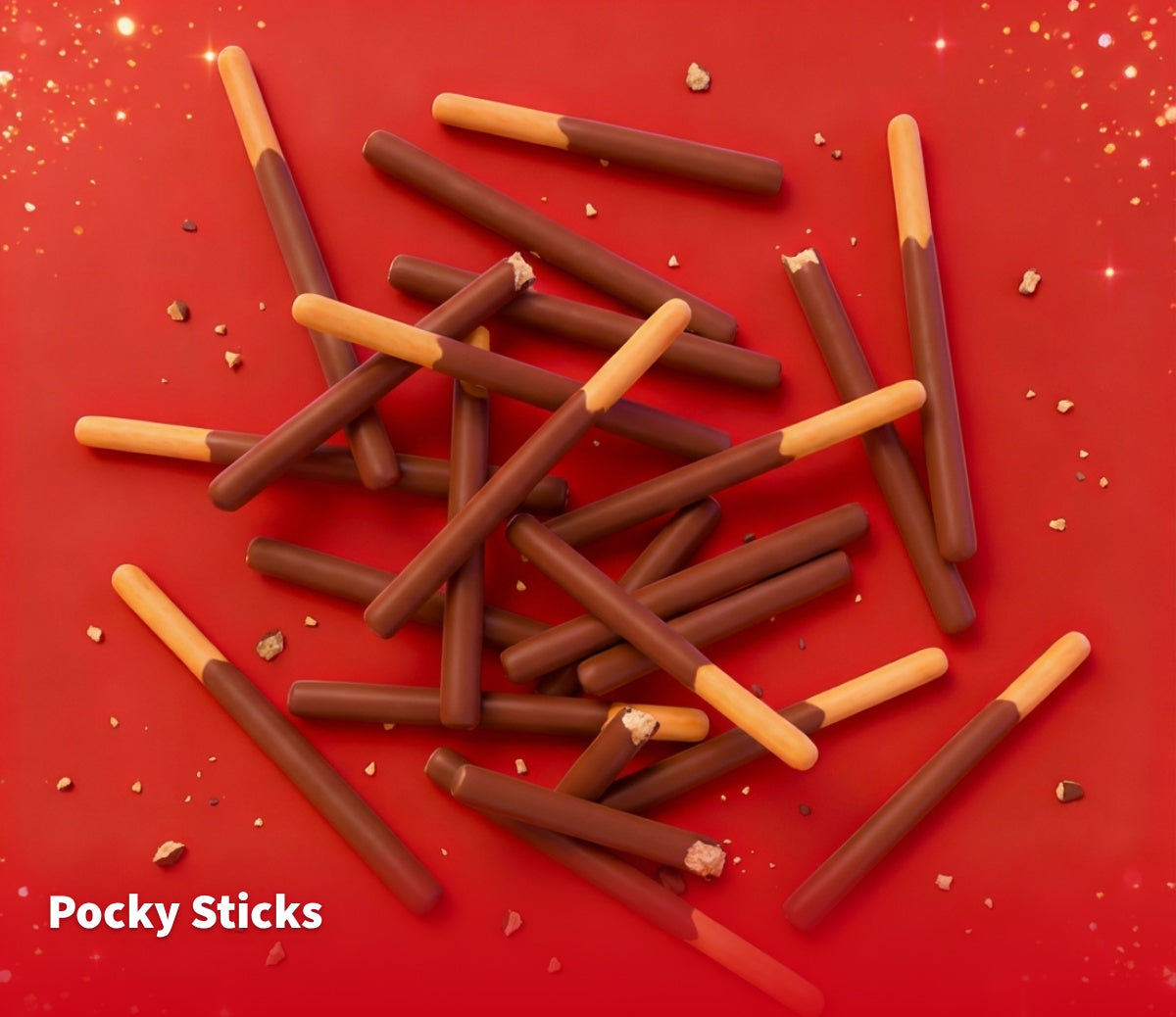
What sets Pocky apart from other snacks is that it has its own official holiday. Because the date 11/11 resembles four Pocky sticks lined up in a row, November 11th is recognized as “Pocky & Pretz Day.”
Established in 1999, it has become a national phenomenon among young people and social media users. Every year on this day, platforms like X (Twitter) and Instagram are flooded with Pocky-related photos—friends sharing sticks, building “Pocky towers,” or taking selfies.
Pocky transforms from a simple snack into a communication tool, serving as a perfect (and delicious) “passport” to connect with those around you.
3) The “Handle” Invention: Omotenashi Engineering
The design of Pocky hides the spirit of “omotenashi”—the Japanese art of thoughtful hospitality and attention to detail.
When Pocky was first released in 1966, chocolate-covered snacks usually meant messy, chocolate-stained fingers. Pocky solved this by leaving a small part of the biscuit uncoated, creating a “handle.”
This allows you to enjoy the snack without getting your hands dirty—a design that fits perfectly into modern life, like snacking while working or using a smartphone. This user-first engineering is one of the reasons Pocky has been loved for over half a century.
- Clean hands: the uncoated end acts as a grip
- Easy sharing: pass sticks around without mess
- Everyday-friendly: ideal for desks, commutes, and quick breaks
4) Traveling Through Seasons: The Sense of “Shun”
In Japanese food culture, “shun” (seasonality) is highly valued. Pocky embraces this by releasing limited-edition flavors that capture the essence of the changing seasons.
From sakura (cherry blossom) and matcha in the spring to the rich, melt-in-your-mouth “Fuyu-no-Kuchidoke” (winter melt) in the winter, seasonal releases let people feel the shift in the year.
There are also regional Pocky featuring local specialties like Yubari melon from Hokkaido or Amaou strawberry from Kyushu. These aren’t just variations; they’re a celebration of Japan’s regional diversity.
Tip: If you’re collecting flavors, try organizing them by season or region—your snack shelf becomes a mini “Japan map.”
Conclusion: A Cultural Icon in a Small Red Box
Pocky is a concentration of everything Japan holds dear: the playful sound of “pokkin,” the thoughtful omotenashi design, and the joy of sharing.
The next time you pick up a box of Pocky, take a moment to listen to the snap. You’ll be hearing the rhythm of a culture that finds beauty and fun in the smallest details of everyday life.
Explore more Japanese snacks and culture stories on Tokyo Stash.