
When it comes to the iconic "Kawaii" characters that symbolize Japanese pop culture, Hello Kitty and Mario are world-famous. But did you know there's an even older "legend" born in 1967 sitting quietly in the candy aisle?
His name is Kyoro-chan.
This bird character, beloved as the face of Morinaga's "Choco Ball," might look like an adorable mascot for children at first glance. But don't be fooled by that pop appearance. Choco Ball isn't just any candy—it's a living legend of the snack world behind one of Japan's longest-running prize campaigns.
Today, we'll unravel the "history" and "analog magic" hidden inside this little box that has captured Japanese hearts for over half a century.
Curious to try it yourself? Start with Morinaga Choco Ball Peanut, or explore more from Morinaga.
From this story, shipped from Japan:
 Morinaga Choco Ball Peanut
 Morinaga Choco Ball Caramel
 Morinaga Choco Ball Strawberry
 Choco Ball Big Pack Peanut
What You'll Learn
- 1) Born in 1967: Before Toys, There Were Manga
- 2) Urban Legend Rarity: The Hunt for the Gold Angel
- 3) The Analog Ritual That Persists in the Digital Age
1) Born in 1967: Before Toys, There Were Manga
The signature feature of Choco Ball is its campaign system: collect the prize marks (gold or silver angel marks) printed on the "beak" (the opening) of the package, and win prizes like toys. But this system wasn't always in its current form.
- 1967 "Can of Manga": When first released, the prize for winners wasn't toys—it was manga!
- 1969 Evolution to "Can of Toys": Two years after launch, to delight an even wider range of children, the contents changed to toys, birthing the legendary name "Omocha no Kanzume" (Can of Toys) that continues to this day.
And it was in 1969 that the fateful "Gold and Silver Angels" appeared. The rule "1 gold or 5 silver" was established then, and more than half a century later, it remains one of the most famous rules in Japan.
2) Urban Legend Rarity: The Hunt for the Gold Angel
At the moment of opening a Choco Ball box's beak, Japanese people hold their breath just a little. Whether there's an angel there or not is a serious moment—almost like fortune-telling for the day.
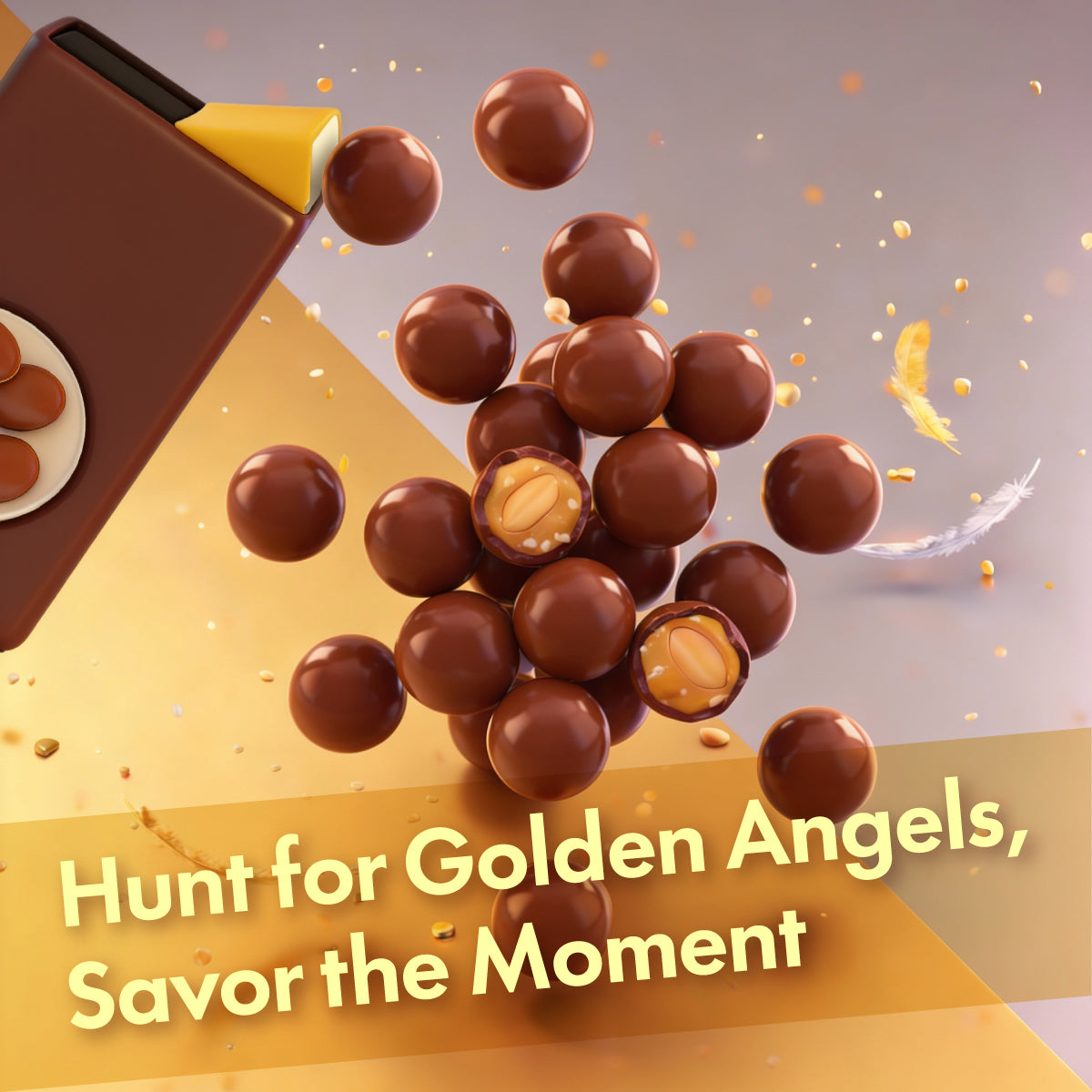
- Gold Angel: If you find this, you're super lucky! Just one gets you the "Can of Toys." Its appearance rate is extremely low—so rare in Japan that it's whispered about as an "urban legend."
- Silver Angel: Collect 5 of these, and you earn the same prize.
The contents of the prize "Can" are regularly renewed, and the details are always kept secret. The excitement of "receiving a mystery box" hasn't changed since the Showa era.
3) The Analog Ritual That Persists in the Digital Age
Most modern sweepstakes and campaigns let you scan a QR code and instantly apply and check results on your smartphone. But Choco Ball stubbornly maintains its classic style of "pasting the angels on a postcard and dropping it in the mailbox"—snail mail.
Here lies "The Joy of Slow Gifting"—the polar opposite of efficiency.
- Proof of Effort: Collecting 5 silver angels especially takes a long time. Gathering angels over months or even years, cutting them out by hand with scissors, pasting them on a postcard—this act isn't mere application work. It's proof of that person's "love and patience for Choco Ball."
- The Richness of Waiting: The period between mailing the postcard and receiving the secret can in your hands—that's the highlight of this experience. The time spent eagerly awaiting delivery, heart racing with "Will it arrive today?"—that excitement is the ultimate treat, something you can never experience with instant digital lotteries.
4) Peanut, Caramel, Strawberry: What's Inside the Box
The box is half the fun. The top folds into a little beak, called the "kuchibashi", that flips open so you can pour out one ball at a time.
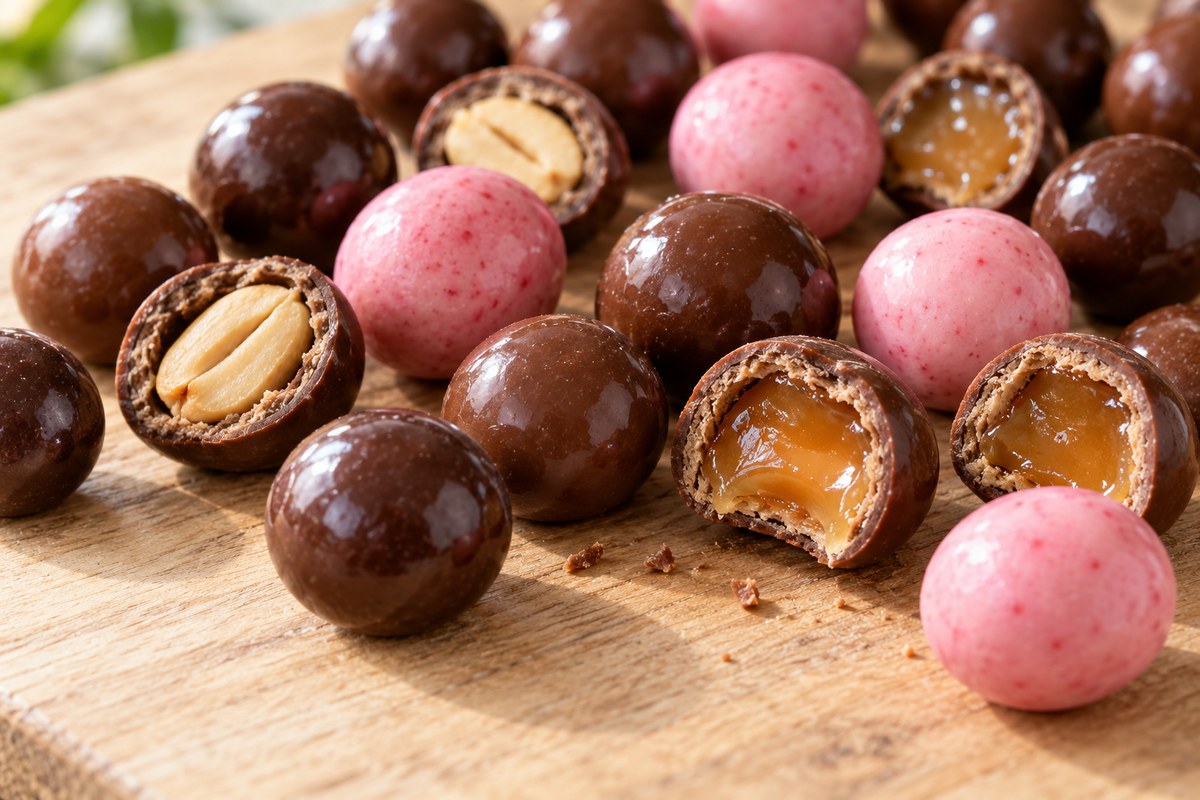
Peanut is the classic: a roasted peanut inside a crisp shell of chocolate. Caramel swaps the nut for a chewy caramel center, and Strawberry adds a pink, fruity coating. Each one has its own Kyoro-chan on the front.
Conclusion: A Japanese Cultural Heritage Wrapped in "Kawaii"
Choco Ball isn't merely a chocolate snack to satisfy a small hunger.
Of course there's the crispy taste wrapped around peanuts or caramel, but beyond that, it's filled with "shared memories" passed down from parents to children, and from children to grandchildren, across more than half a century.
You don't have to be in Japan to join in. Pick up a box, flip open the beak, and check for an angel. The prize campaign itself runs in Japan, but that small moment of suspense travels anywhere.
Ready to open the beak? Morinaga Choco Ball Peanut ships from Japan, alongside more from Morinaga.
Keep reading:
Explore more Japanese snacks and culture stories on Tokyo Stash.