
Stand in the rice-seasoning aisle of a Japanese supermarket and you will see dozens of small colorful packets that all appear to do the same job. They do not. Two packets that look nearly identical may need completely different steps—one goes on finished rice, the other goes into the rice cooker before the rice is even cooked.
The useful way to sort them is not by flavor. It is by timing. Japanese rice seasonings divide into four families: things you sprinkle on cooked rice, things you fold into cooked rice, things you cook together with the raw rice, and things you pour hot liquid over. Get the timing right and every one of them works. Get it wrong and you will end up with a wet packet of seasoning sitting on top of a bowl of rice, wondering what went wrong.
This is a guide to all four, and to the Hiroshima company whose purple-red seasoning is one of the most recognizable things in the category.
Want to try them? Start with Mishima Yukari red shiso furikake, or explore Mishima rice seasonings—furikake and mixed-rice mixes—at Tokyo Stash.
From this story, shipped from Japan:
 Mishima Yukari Red Shiso Furikake
 Mishima Takikomi Wakame Seaweed Rice Mix
 Mishima Nameshi Daikon Greens Rice Seasoning
 Mishima Kaori Green Shiso Furikake
 Nagatanien Ochazuke Nori
What You'll Learn
- 1) The four-way map
- 2) Mishima Foods and the red-shiso landmark
- 3) Why folded-in seasonings own the lunchbox
- 4) Cooking the seasoning with the rice
- 5) Using them on things that are not rice
1) The Four-Way Map
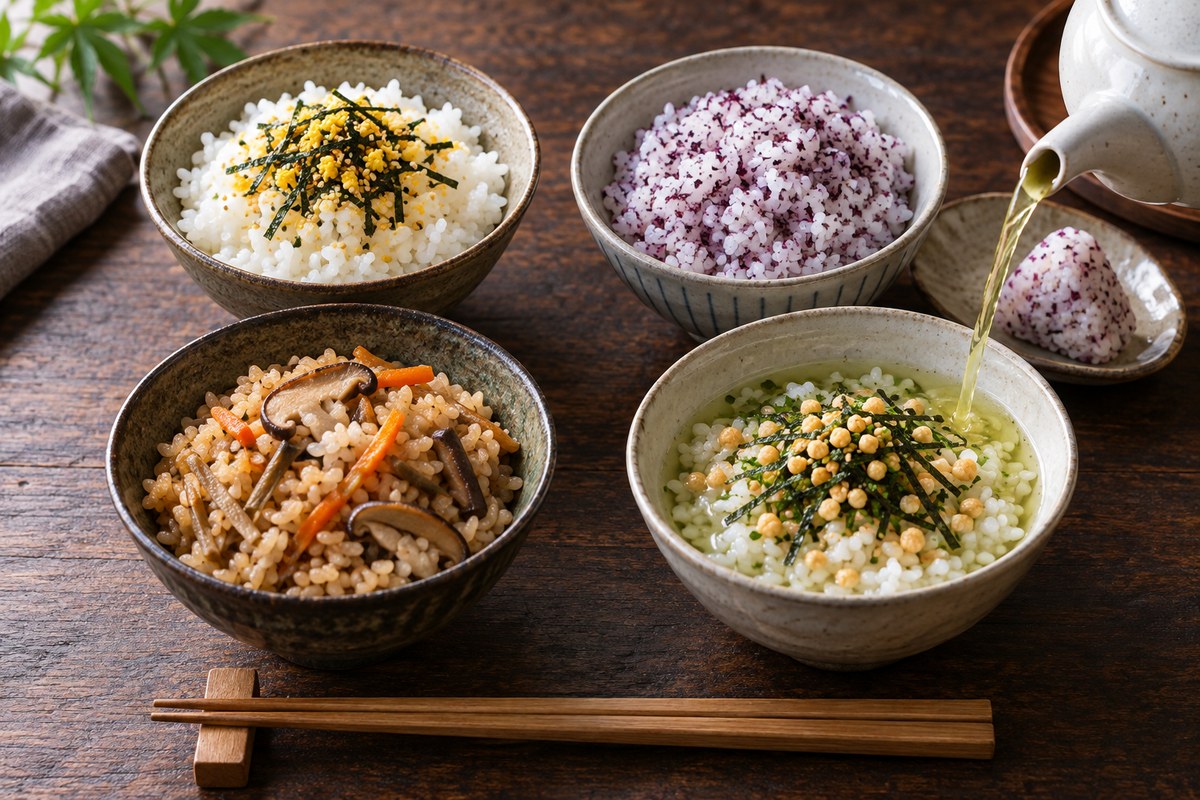
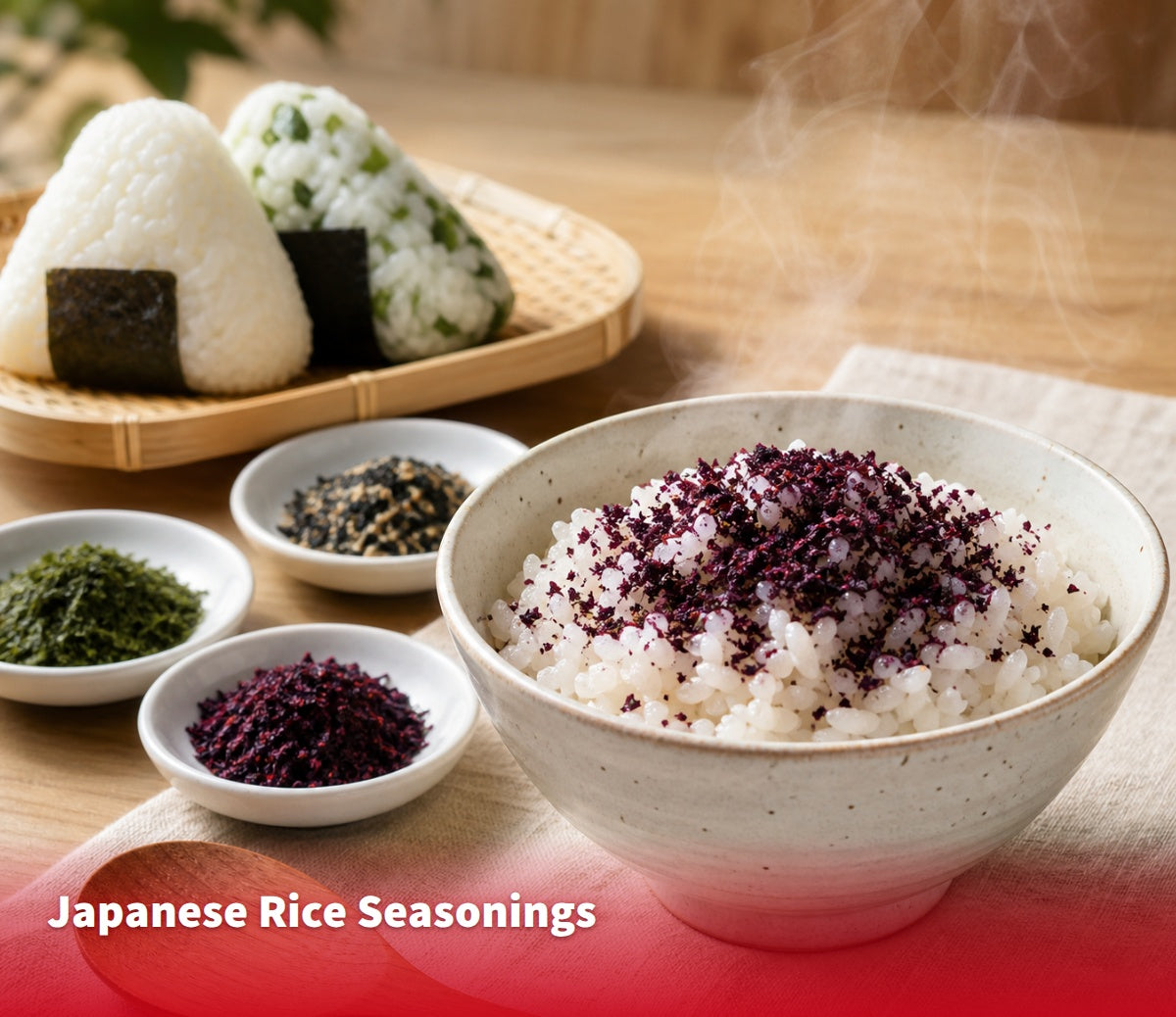
Sprinkle on top: furikake (ふりかけ). Dry seasoning scattered over hot cooked rice. The mix may contain nori, sesame, bonito, salmon, egg, vegetables, or shiso. You control the amount grain by grain, and nothing needs to be stirred.
Fold into cooked rice: mazekomi (混ぜ込み). These are mixed-rice seasonings, added to hot cooked rice and stirred through, sometimes with a brief rest under a lid. The result is seasoned all the way through rather than concentrated on top. In Japanese this style of dish is "maze gohan" (混ぜご飯, mixed rice)—cooked rice combined with separately seasoned ingredients.
Cook with the raw rice: takikomi (炊き込み). Here the seasoning liquid and ingredients go in with the washed rice and water, and everything cooks together. This is "takikomi gohan" (炊き込みご飯), and it produces a different result entirely—the grains absorb the seasoning as they cook. Because each product specifies its own water level, the package instructions override any general rule you have read.
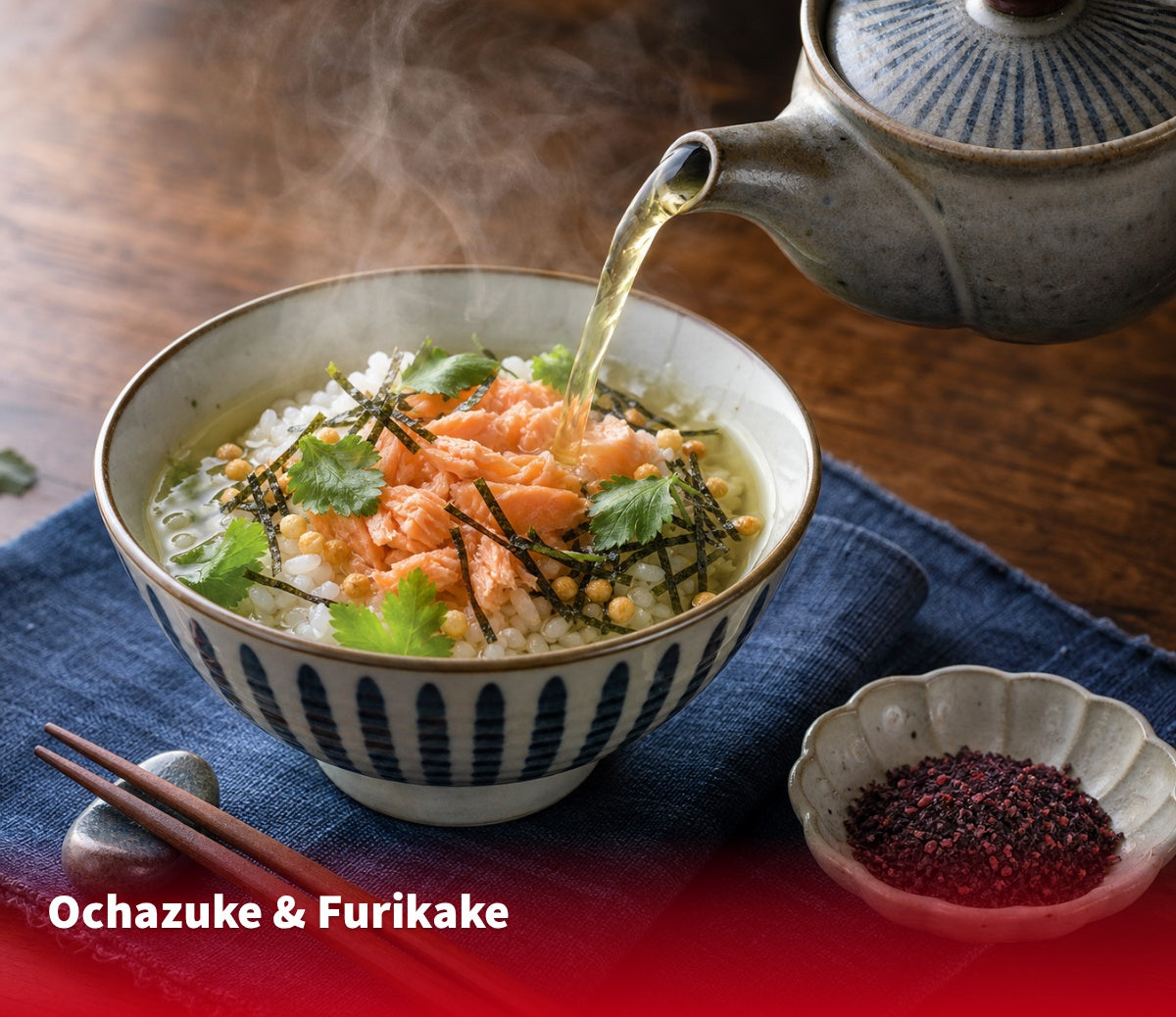
Pour hot liquid over: ochazuke no moto (お茶漬けの素). Salt, umami, and toppings designed to be scattered on rice and then flooded with hot water or dashi to make a soupy bowl.
One genuine trap deserves flagging. Mishima's Takikomi Wakame has "takikomi" in its name but is sold as a mazekomi product—a mixed-rice seasoning for folding into already-cooked rice. The name is not a promise about method. When in doubt, the package instructions win.
2) Mishima Foods and the Red-Shiso Landmark
Mishima Foods (三島食品) makes a good lens for the whole category. Its corporate history dates the business to 1949 in Hiroshima, founded as Mishima Shōten and renamed Mishima Foods Co., Ltd. in 1961.
Its signature product is Yukari, a red-shiso furikake the company says it commercialized in 1970 after developing a way to season and dry the red shiso used in making "umeboshi" (梅干し, salt-pickled plums). Rather than a fish-and-sesame profile, it delivers something tart, salty, and herbal—the flavor many people associate with umeboshi, but dry and sprinkleable.
The name carries a small double meaning. Yukari can suggest both a purple hue and a personal connection or affinity, and Mishima says it chose the name for the product's purple-red color together with the wish to value its ties with customers. Note that Yukari is Mishima's registered trademark: if you want the generic category, "red shiso furikake" is the phrase.
There is a nice piece of commercial history here too. Mishima says Yukari was first sold in large bags for foodservice use, and only later moved into consumer packages. The company supplies schools, hospitals, and restaurants to this day—which is why a great many Japanese adults first met this flavor on a school lunch tray rather than at home.
The rest of the range shows the category's breadth: Kaori, a green-shiso furikake; Nameshi, a greens-and-rice mix; Umeko; and the wakame-based mixed-rice seasonings. "Nameshi" (菜めし) itself is worth knowing as a dish—chopped green vegetables, often daikon leaves, folded through cooked rice.
A note on the umeboshi connection: there is a genuine home tradition of drying the red shiso left over from plum-pickling and grinding it into a seasoning. But it would be too neat to say all red-shiso furikake is "a by-product of umeboshi making." Mishima's Yukari is a manufactured product made by seasoning and drying red shiso, not simply repurposed pickling leftovers.
3) Why Folded-In Seasonings Own the Lunchbox
Mixed-rice seasonings have a specific advantage that becomes obvious the moment you pack a lunch: the flavor is distributed evenly and it stays put.
Sprinkled furikake sits on the surface. That is perfect for a bowl you are about to eat, but in a "bento" (弁当, packed lunch) that gets carried sideways in a bag, loose dry seasoning migrates into everything else. Folded-in seasoning is already part of the rice, so the lunchbox arrives looking the way it was packed.
The same logic makes mazekomi products the natural choice for "onigiri" (おにぎり, rice balls). Fold the seasoning through the hot rice, let it rest briefly, then shape. Every bite is seasoned rather than just the first one, and the rice holds together well because you have been working it while warm.
The method is simple: use rice that is still hot, add the packet, and fold rather than stir aggressively—you want to keep the grains intact. If the product suggests resting under a lid for a minute or two, do it; that lets dried ingredients such as wakame soften and take up moisture.
4) Cooking the Seasoning with the Rice
Takikomi is the most transformative of the four, and the only one where you commit before cooking.
A takikomi packet typically contains a seasoning liquid and solid ingredients—mushrooms, chicken, burdock, vegetables, or mountain greens. You wash the rice, add water to the level the package specifies, add the seasoning and ingredients, and cook. The grains absorb soy, dashi, and aromatics as they swell, which is why the result tastes integrated in a way that stirring at the end cannot replicate.
Two practical cautions. First, the water level matters more than usual, because the seasoning liquid is part of the total volume—this is why every package specifies its own measurement rather than deferring to your normal rice ratio. Follow the packet, not habit. Second, resist the urge to stir during cooking; let it finish, then fold gently before serving.
A takikomi bowl is substantial enough to be the center of a meal rather than an accompaniment to one. If you are cooking for guests and want a single dish that feels considered without much work, this is the category to reach for.
5) Using Them on Things That Are Not Rice
Japanese rice seasonings are conspicuously good on food that has nothing to do with rice, and the manufacturers say so themselves. Mishima suggests its green-shiso Kaori for spaghetti, soup, tempura batter, dressed vegetable dishes, natto, and chilled tofu.
Some combinations worth trying: a seaweed-and-sesame furikake shaken over popcorn instead of salt; red-shiso Yukari tossed through buttered pasta or stirred into potato salad for a tart, herbal lift; any furikake over scrambled eggs, avocado toast, roasted vegetables, or a cucumber salad. Yukari is particularly good on cold dishes, where its acidity does the work a squeeze of lemon might otherwise do.
Two rules make all of this work better. Add dry seasonings near the end—their crisp texture is part of the appeal and prolonged cooking flattens it. And taste before you add salt, because most of these products are already salty.
Conclusion: Read the Timing, Not the Flavor
If you take one thing away, make it this: before you open a Japanese rice-seasoning packet, work out when it is meant to be used. Sprinkle, fold, cook, or steep. The flavor on the front of the package tells you what it will taste like; the instructions on the back tell you whether it will work at all.
For a first order, a red-shiso furikake and one mixed-rice packet cover a lot of ground—one for immediate sprinkling and one for onigiri and lunchboxes. Store opened packets sealed and away from humidity, since these are dry products and moisture is what ruins them. And check the label rather than the flavor name for allergens: wheat, soy, sesame, egg, fish, and crustacean all appear across this category depending on the product.
Rice is the constant in a Japanese meal. These four families are simply the different speeds at which you are allowed to change it.
Ready to season some rice? Start with Mishima Yukari, explore Mishima rice seasonings, or browse Nagatanien furikake and ochazuke, at Tokyo Stash.
Keep reading:
Explore more Japanese snacks and culture stories on Tokyo Stash.