
A bowl of rice can be a full meal, a side dish, or a blank canvas. In Japan, two pantry staples show just how much can happen with that canvas: "ochazuke" (お茶漬け, rice warmed with tea or broth) and "furikake" (ふりかけ, a dry seasoning scattered over rice like edible confetti). Neither is complicated. That is precisely the point.
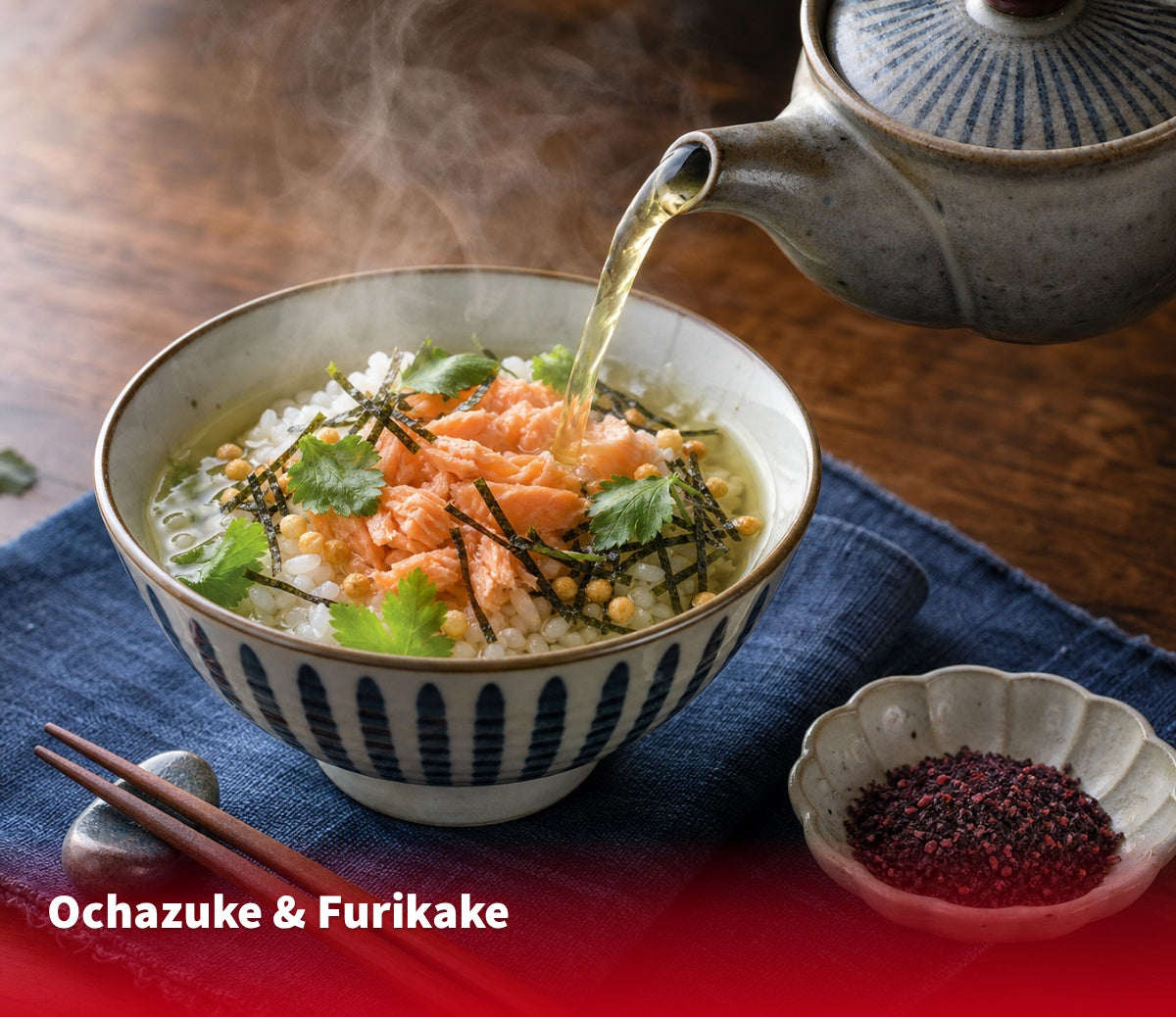
Ochazuke begins with cooked rice, a savory topping, and a stream of hot liquid—traditionally green tea, but often dashi or simply hot water. Furikake needs no pouring at all: open a packet or jar, sprinkle, and eat. One is soft, soothing, and spoonable; the other is dry, aromatic, and quick. Together, they turn plain rice into something personal.
For overseas cooks, these foods are a welcoming entry into Japanese home-style eating. They are not showy dishes that demand specialist technique. They are practical, flexible, and deeply tied to the small moments when a person wants food to be warm, savory, and easy: breakfast before a busy day, a simple bento lunch, or the last quiet bowl of the evening.
Want to stock your own rice-lover's pantry? Start with Nagatanien Ochazuke Nori and Otona no Furikake, or explore more from Nagatanien at Tokyo Stash.
From this story, shipped from Japan:
 Nagatanien Ochazuke Nori (8 packets)
 Nagatanien Salmon Ochazuke (6 packets)
 Nagatanien Otona no Furikake
 Mishima Yukari Red Shiso Rice Seasoning
 Mishima Nori Koumi Sesame & Seaweed Furikake
What You'll Learn
- 1) Ochazuke: rice, steam, and a little relief
- 2) The instant ochazuke revolution
- 3) Furikake: the small seasoning with a large job
- 4) The quiet culture around a bowl of rice
- 5) How to make—and use—both at home
1) Ochazuke: Rice, Steam, and a Little Relief
The word ochazuke is often translated as "tea-soaked rice." At its simplest, it is a bowl of warm Japanese rice topped with something salty or savory, then loosened with hot green tea. The rice softens at the edges, the topping perfumes the broth, and the whole bowl becomes easier to eat than rice on its own. A bowl may be modest—rice, nori, sesame, and pickles—or more substantial, with grilled salmon, salted salmon flakes, "umeboshi" (pickled plum), mentaiko, or a piece of fish.
The tea is important, but it need not be treated with ceremony. A mild green tea such as sencha or bancha brings vegetal aroma and a gentle tannic edge. Dashi gives a deeper umami character, especially with fish or mushrooms. Hot water is the most neutral option, allowing salty toppings and packaged seasoning to lead. The result sits somewhere between a soup, a rice bowl, and a restorative snack.
Its history is best approached with humility. The precise origin of ochazuke is uncertain. Rice served with hot water existed earlier in Japanese food culture, and sources connect a rice-and-hot-water dish called yuzuke with earlier periods. By the early Edo period, tea-based rice preparations appeared in culinary writing. So it is safer to think of ochazuke not as a dish invented on one date by one person, but as a long-evolving answer to a very human question: what can make leftover or everyday rice warm, flavorful, and satisfying right now?
That practicality helps explain its emotional place. Ochazuke is often associated with tiredness, late hours, light appetites, and the wish for "just a little something." It is not necessarily a meal made for display. It is a meal made for settling down. The hot liquid carries aroma upward; the rice offers substance without heaviness; a salty pickle or piece of fish gives the bowl a point of focus. Comfort here is not extravagance. It is proportion.
2) The Instant Ochazuke Revolution
Home-style ochazuke had existed in many forms, but Nagatanien gave it a new kind of convenience with Ochazuke Nori, launched in 1952. The product made the experience portable and repeatable: put cooked rice in a bowl, add a packet, pour in hot water, and a familiar rice dish is ready in moments.
The packet is instantly recognizable to many Japanese shoppers. Its striped design uses yellow, red, black, and green, and Nagatanien connects the visual to the curtain of a kabuki theater. That theatrical look is a delightful contrast to the food itself. Inside is not a grand meal but a small, practical collection of flavor: seasoning, nori seaweed, and "arare" (tiny crisp rice crackers).
Those arare matter more than they first appear to. They provide contrast: a little crunch at the beginning, then a softer chew as they meet the hot liquid. Nori contributes an oceanic aroma that opens in the steam. The seasoning carries salt, green-tea notes, and umami, so the product works with boiling water even if a kettle of brewed tea is not available. In other words, the packet does not merely flavor rice; it recreates several sensations of a composed bowl.
Instant ochazuke also captures a useful Japanese pantry idea: convenience does not have to mean abandoning recognizable ingredients. The dish remains rice, seaweed, crackers, savory seasoning, and hot liquid. The package simply reduces the number of decisions between hunger and dinner. That is why it works well in dorm kitchens, offices, travel bags, and late-night cupboards.
For a first experience, follow the packet's instructions. Once you know the flavor, experiment with the amount of liquid. Less liquid creates a more intensely seasoned rice bowl; more liquid makes it gentler and more soup-like. The best version is often the one that suits your mood.
3) Furikake: The Small Seasoning with a Large Job
If ochazuke changes rice by adding hot liquid, furikake changes it by adding concentrated flavor. The name refers to the action of sprinkling. Furikake is dry, shelf-stable, and usually served directly over warm rice. It may contain nori, sesame seeds, dried bonito, salmon, tiny dried fish, egg, vegetables, salt, sugar, or seasonings. The combinations are broad enough that "furikake" is less one flavor than a whole category of rice companions.
Its modern origin story is often linked to the early 20th century and to an effort to make everyday rice more nutritious. A commonly repeated account describes a fish-based seasoning developed in Kumamoto partly to provide calcium and protein. That story is useful because it explains furikake's original logic: rice was a staple, and a dry topping could add flavor and useful ingredients without requiring a separate elaborate dish. Still, the exact "first furikake" claim is debated, so it is best not to imagine a single, uncontested inventor.
What is uncontested is the appeal of the format. Furikake stores easily, travels well, and gives a bowl of rice a distinct identity in seconds. A child may choose a mild egg or bonito flavor; another person may want shiso, wasabi, salmon, or seaweed and sesame. At a bento meal, it can turn a plain bed of rice into something that tastes intentionally packed rather than merely filled.
Two famous examples reveal furikake's range. Nagatanien's Otona no Furikake debuted in 1989. Its name means "furikake for adults," though it is not restricted to adults; the idea was to present furikake as a more grown-up, high-quality pleasure rather than only a children's food. Mishima Foods' Yukari is another classic: a vivid red-shiso seasoning developed in 1970. Its tart, fragrant shiso character offers a completely different direction from fish- or seaweed-forward blends.
Together, these products show why furikake lasts. It can be playful, nostalgic, refined, tangy, smoky, sweet-savory, or seaweed-rich. But its purpose remains beautifully simple: make the rice in front of you taste good.
4) The Quiet Culture Around a Bowl of Rice
Ochazuke often belongs to transitions: between dinner and sleep, between an evening out and going home, between feeling hungry and wanting only a light meal. It is frequently associated with the late-night "last bite," especially after drinking. Rather than ending the evening with another heavy plate, a diner may want hot rice, broth, and something salty. The bowl feels like a soft landing.
There is also a well-known Kyoto anecdote around "bubuzuke" (the local name for ochazuke). In the comic version of the story, a host offers bubuzuke to a guest as an indirect cue that the visit has gone on long enough. The guest accepts enthusiastically, missing the supposed hint. It is a memorable story because it plays on ideas about Kyoto politeness and indirect speech. It should be treated as a joke and a stereotype, not as an instruction manual for visiting Kyoto. If someone genuinely offers you food, do not assume they are trying to send you away.
At the table, ochazuke can also be the opposite of a rushed convenience meal. Restaurants may serve a polished version with grilled sea bream, salmon, eel, or other seafood, often accompanied by a fragrant dashi. The diner may eat part of the fish and rice as it is, then pour the liquid over the rest. This creates a small sequence inside one bowl: crisp or grilled flavors first, then a warm savory finish.
Furikake lives in a different but equally intimate setting: the bento. A dusting of seasoning over rice can add color and flavor without making the lunch box messy. It can also sit beside a simple breakfast of rice, soup, and egg, ready for anyone who wants a little extra salt or seaweed aroma. Both furikake and ochazuke reflect an everyday Japanese preference for adaptable building blocks rather than one fixed recipe.
5) How to Make—and Use—Both at Home
To make instant ochazuke, begin with freshly cooked or reheated short-grain rice in a bowl. Add one packet of seasoning. Then pour over boiling water according to the package directions—Nagatanien's Ochazuke Nori suggests roughly 150 ml of water for one packet over a serving of rice. Give it a light stir, wait just long enough for the seasoning to dissolve, and eat while the nori is fragrant and the rice is hot.
Water is the easiest choice, particularly for instant packets that already contain green-tea powder and seasoning. It gives a clean, balanced result. Use brewed green tea when you want tea aroma to be more noticeable, but choose a mild tea and avoid over-steeping it: a very bitter cup can dominate the rice. Use dashi when you want a richer bowl, especially with salmon, grilled fish, mushrooms, or tofu. Kombu dashi suits a vegetarian version; a bonito-based dashi makes a more savory seafood-style bowl.
Toppings can be as restrained or generous as you like. Try umeboshi for bright salinity, sliced scallion for freshness, toasted sesame for nuttiness, wasabi for heat, or shredded nori for more aroma. Leftover grilled salmon is excellent. So are flaked canned salmon, roasted mushrooms, a soft-boiled egg, pickled vegetables, or a small piece of smoked fish. The key is balance: because the broth is light, one or two toppings are often enough.
Furikake starts with rice, but it should not end there. Fold it into warm rice before shaping onigiri, or sprinkle it over a finished rice ball for color. Toss it through buttered pasta with a little pasta water for a fast seaweed-and-sesame finish. Shake it over popcorn instead of plain salt. Use it on scrambled eggs, fried eggs, avocado toast, roasted vegetables, or a cucumber salad. A seaweed-and-sesame blend can be especially versatile; a red-shiso blend brings a sharper, more herbal note.
One useful rule is to add furikake near the end. Its dried ingredients and crisp texture are part of the pleasure, so prolonged cooking can flatten its character. Taste first, too: many blends are already salty, and some include fish, sesame, wheat, soy, egg, or other allergens. Let the label guide you.
Conclusion: Hot Rice, a Little Seasoning, a Few Quiet Minutes
Ochazuke and furikake make a persuasive case for keeping rice simple. Ochazuke turns it into a warm, steamy bowl that can feel like a pause at the end of a long day. Furikake turns it into a fast, flavorful base for lunch, breakfast, or a snack. One depends on liquid; the other depends on a sprinkle. Both show how Japanese pantry foods can make everyday rice feel considered.
Start with one packet of ochazuke mix and one furikake flavor that appeals to you. Then let the bowl evolve. Add tea instead of water, try dashi, use leftover salmon, fold furikake into onigiri, or keep a jar beside your rice cooker. Comfort food does not always need a long recipe. Sometimes it needs hot rice, a little seasoning, and a few quiet minutes.
Ready to try it tonight? Pick up Ochazuke Nori, Otona no Furikake or Yukari, or explore more from Nagatanien at Tokyo Stash.
Keep reading:
Explore more Japanese snacks and culture stories on Tokyo Stash.