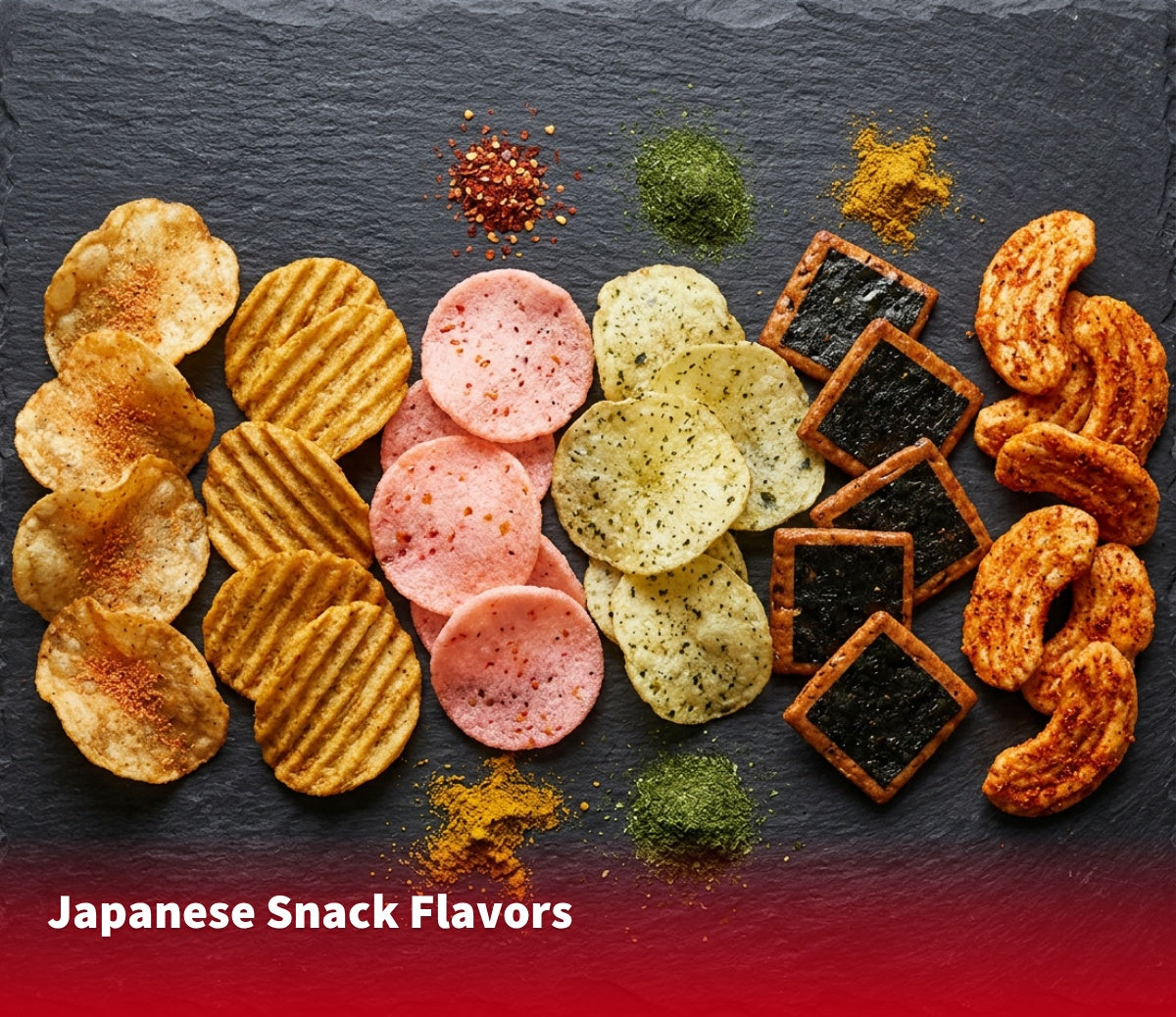

Walk into any convenience store in Japan, and the chip aisle will stop you cold. Not because it is big, but because it is confusing. You will see potato chips flavored with mentaiko (spicy cod roe), butter from a single Hokkaido dairy, and takoyaki sauce that somehow captures the exact taste of an Osaka street stall. On the next shelf, there is a bag celebrating a prefecture you have never heard of, in a flavor that will be gone in three months.
This is not randomness. It is a deeply structured system -- one that ties snack flavors to seasons, geography, and a cultural obsession with novelty that goes back centuries. Once you understand how it works, every bag on the shelf starts to make sense.
Here is your guide to the method behind the madness.
Curious to dive in? Explore Calbee snacks available at Tokyo Stash.
From this story, shipped from Japan:
 Calbee Kappa Ebisen Shrimp Snack
 Kappa Ebisen Kyushu Soy Sauce (regional flavor)
 Potato Chips Kansai Dashi Soy Sauce (regional flavor)
 Potato Chips Nori Shio (seaweed salt)
 Jagariko Tarako Butter
What You'll Learn
- 1) The flavor calendar: why Japanese snacks change with the seasons
- 2) Regional flavors: snacks as edible postcards
- 3) The limited-edition machine: how scarcity drives excitement
- 4) A first-timer's guide to Japanese flavor vocabulary
1) The Flavor Calendar: Why Japanese Snacks Change with the Seasons
In Western markets, a chip flavor launches and either survives forever or gets quietly discontinued. Lay's Classic has tasted the same since 1961. Japanese snack companies operate on a completely different logic. They think in seasons.
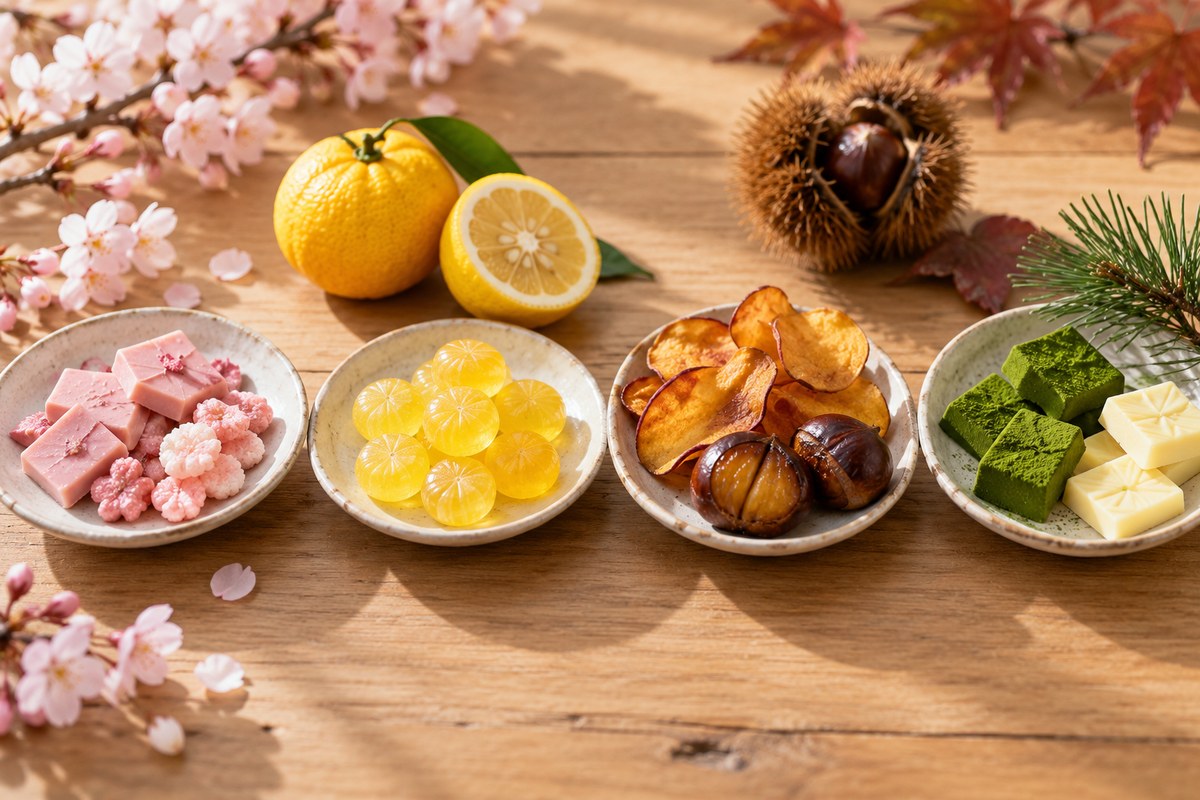
Every spring, shelves fill with sakura (cherry blossom) editions. These are not just pink packaging -- the products carry a delicate, slightly floral sweetness designed to evoke hanami, the centuries-old tradition of picnicking under blossoming trees. When the blossoms fall, so do these flavors. They are not meant to last.
Summer brings citrus: yuzu, shikuwasa (Okinawan lime), and sudachi. These flavors are sharp and bright, calibrated for humid months when appetites lean toward refreshing tastes. By September, they vanish, replaced by sweet potato, chestnut, and roasted flavors that mirror the warmth of autumn.
Winter closes the cycle with rich, indulgent profiles: matcha chocolate, strawberry chocolate, and warming spices. The pattern then resets.
This "flavor calendar" reflects a concept called shun -- the Japanese principle that ingredients have a peak moment of perfection. Shun governs high-end kaiseki cuisine, but it shapes mass-market snacks too. Seasonal flavors sell not only because of how they taste, but because customers feel a connection to the passing of time. Buying a sakura chip in April is a small ritual, a way of acknowledging that spring arrived.
For snack companies, the calendar also solves a business problem. Rotating flavors give customers a reason to buy repeatedly. You cannot stockpile a flavor that disappears in eight weeks. The urgency is built in.
2) Regional Flavors: Snacks as Edible Postcards
Japan is a country of intensely local food identities. Every prefecture, sometimes every city, claims a signature dish or ingredient. Hakata has mentaiko. Osaka has takoyaki. Hokkaido has dairy so rich it has its own reputation. Japanese snack makers realized decades ago that these regional identities could be turned into flavors -- and that people would buy them not just for taste, but as souvenirs.
The industry calls these gotochi flavors (gotochi means "local" or "regional"). Walk through Tokyo Station's souvenir shops and you will find potato chips representing nearly every corner of the country. But gotochi flavors are not just for tourists. Many of the best ones reach national distribution because the flavors are genuinely good.
Kappa Ebisen Mentaiko is a perfect example. Kappa Ebisen -- Calbee's iconic shrimp cracker -- has been a staple since 1964. The mentaiko edition takes that familiar shrimp base and layers it with the salty, slightly spicy punch of Hakata-style seasoned cod roe. It is not a gimmick. The shrimp and mentaiko combination is a natural pairing, something you would actually find on a restaurant menu in Fukuoka. That culinary logic is what separates Japanese regional flavors from the "weird for weird's sake" experiments you sometimes see elsewhere.
Jagariko Takoyaki follows the same principle. Jagariko -- Calbee's stick-shaped potato snack with its satisfying crunch -- gets coated in a seasoning that recreates takoyaki sauce: savory, slightly sweet, with a hint of Worcestershire depth. If you have ever stood at a street stall in Dotonbori watching octopus balls turn golden on the griddle, this flavor will take you right back.
Then there is Potato Chips Kyushu Milk Butter, which captures something harder to pin down: the gentle, creamy sweetness of butter made from Kyushu dairy. It does not taste like artificial butter flavoring. It tastes like someone melted actual butter onto a warm chip. The key is that Calbee sources the flavor profile from real regional ingredients, working with local producers to get the balance right.
What makes gotochi work culturally is that Japan treats food as an expression of place. When you eat a mentaiko snack, you are not just eating a flavor -- you are engaging with Hakata's identity. This is why gotochi products make such popular gifts. Handing someone a box of regional snacks says, "I went there, and I brought the taste back for you."
3) The Limited-Edition Machine: How Scarcity Drives Excitement
Japanese convenience stores bring in new snack products every week, and many are gone within a month or two. This is not waste -- it is strategy.
The concept draws from a broader Japanese cultural pattern. Department store basement food halls (known as depachika) have offered rotating seasonal sweets for generations. Limited-run ceramics, seasonal wagashi (traditional confections), and even limited-batch sake all follow the same logic: scarcity creates desire, and desire creates conversation.
Snack companies adapted this pattern for the mass market. Calbee, Bourbon, Meiji, and other major makers maintain dedicated teams whose sole job is developing short-run flavors. A typical limited edition goes from concept to shelf in as little as three months. The product will be manufactured for a single production run, distributed for four to eight weeks, then gone.
Social media accelerated this machine dramatically. When Calbee releases a new potato chip flavor, Japanese Twitter (now X) lights up with taste reports within hours. The hashtag culture around new snack releases is enormous. Food bloggers and YouTube reviewers race to cover limited editions before they sell out. For snack companies, every new flavor is essentially free marketing.
The collaboration model pushes this further. Japanese snack brands partner with restaurants, anime franchises, regional tourism boards, and even other food brands. You might see Jagariko collaborate with a famous ramen chain, or Pocky release an edition designed with a popular anime character on the box. These crossovers are not cynical cash grabs -- they are treated as genuine creative projects, and fans evaluate them seriously.
For international fans, the limited-edition cycle creates a particular kind of FOMO. A flavor available in January may be completely unobtainable by March. This is one reason Japanese snack subscription boxes and curated shops exist: they bridge the gap for people who cannot walk into a Japanese konbini every week.
4) A First-Timer's Guide to Japanese Flavor Vocabulary
The biggest barrier to navigating Japanese snacks is not the flavors themselves -- it is the language. Most packaging is in Japanese, and even English-labeled products use terms that do not translate neatly. Here is a practical decoder for the most common flavors you will encounter.
Mentaiko -- Salted and spiced cod or pollock roe. The flavor is salty, savory, and mildly spicy with an ocean-forward depth. Think of it as Japan's answer to anchovy paste: intense, umami-rich, and transformative when used as a seasoning. If you enjoy bold savory flavors, mentaiko snacks are an excellent starting point.
Yuzu -- A Japanese citrus fruit that tastes like a cross between lemon, grapefruit, and mandarin orange, but more floral and aromatic than any of those. Yuzu flavoring is tart and fragrant, never cloying. You will find it in both sweet and savory snacks.
Umeboshi -- Pickled Japanese plum. The flavor is intensely sour, salty, and slightly fruity. Umeboshi-flavored snacks are polarizing by design -- they are meant to be a sharp, refreshing shock to the palate, not a gentle introduction.
Matcha -- Stone-ground green tea powder with a rich, slightly bitter, deeply vegetal flavor. Matcha snacks balance this bitterness against sweetness, creating a sophisticated profile that tastes nothing like generic "green tea flavor."
Wasabi -- The real thing is far more complex than the neon-green paste at most sushi restaurants outside Japan. True wasabi flavor has heat that hits the nose rather than the tongue, with a fresh, almost herbal undertone. Wasabi snacks range from mild tingle to sinus-clearing intensity.
Nori Shio -- Seaweed salt. A combination of roasted nori seaweed and salt that is possibly the most "Japanese" chip flavor in existence. Subtle, savory, and mildly oceanic. If you want to understand what everyday Japanese flavoring tastes like, start here.
Milk Butter -- Not the heavy butterscotch you might expect. Japanese milk butter flavoring is gentle, creamy, and only slightly sweet. It reflects the prized quality of Hokkaido and Kyushu dairy -- rich but never greasy.
A good strategy for newcomers: start with nori shio or milk butter for gentler introductions, then work toward mentaiko and umeboshi as your palate acclimates. Yuzu and matcha sit comfortably in between -- familiar enough to feel approachable, distinctive enough to feel like a discovery.
Conclusion: Every Flavor Tells a Story
Japanese snack flavors are not random acts of creativity. They are expressions of a food culture that values seasonality, regional pride, and the thrill of something new. The flavor calendar connects snacking to the natural rhythm of the year. Gotochi flavors turn chips and crackers into edible souvenirs. Limited editions keep the conversation alive week after week.
Once you see the system, you stop asking "why would anyone make takoyaki-flavored potato sticks?" and start asking "what else are they making right now?" That shift in perspective is the real gateway into Japanese snack culture.
The only way to truly understand it is to start tasting.
Ready to explore the flavors? Browse Calbee and other Japanese snack brands at Tokyo Stash.
Keep reading:
Explore more Japanese snacks and culture stories on Tokyo Stash.