
Here is a question that trips up almost everyone: what is the difference between matcha and green tea?
The most common answer -- "matcha is just a type of green tea" -- is technically correct and practically useless. It is like saying espresso is just a type of coffee. True, but it misses everything that matters. Matcha and standard green tea come from the exact same plant, Camellia sinensis, yet they taste, look, feel, and behave so differently that treating them as interchangeable is a fundamental misunderstanding.
The real difference is not the plant. It is what happens to the plant in the weeks before harvest -- and what happens to the leaves after. That process explains why matcha tastes the way it does, why it works so brilliantly in sweets, and why it went from a quiet temple ritual to one of the most recognizable Japanese flavors in the world.
Want to taste the difference? Explore matcha snacks available at Tokyo Stash.
From this story, shipped from Japan:
 KitKat Rich Matcha
 Bourbon Alfort Mini Rich Matcha
 Kinoko no Yama Uji Matcha
 Takenoko no Sato Nishio Matcha
 Ito En Oi Ocha Matcha Green Tea Bags
What You'll Learn
- 1) Same plant, completely different process: how shade changes everything
- 2) The taste difference: why matcha and green tea are nothing alike
- 3) From tea ceremony to Kit Kat: matcha's unlikely journey
- 4) Matcha snacks worth trying: a guided tour
1) Same Plant, Completely Different Process
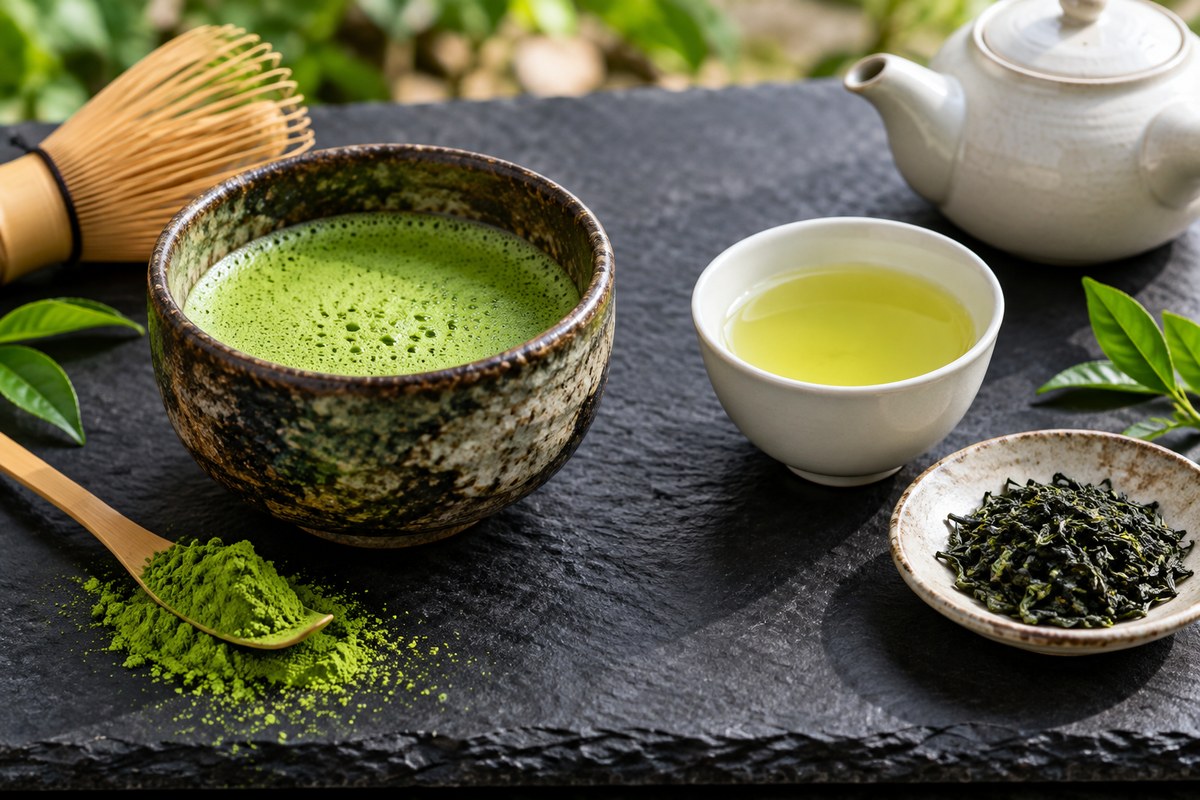
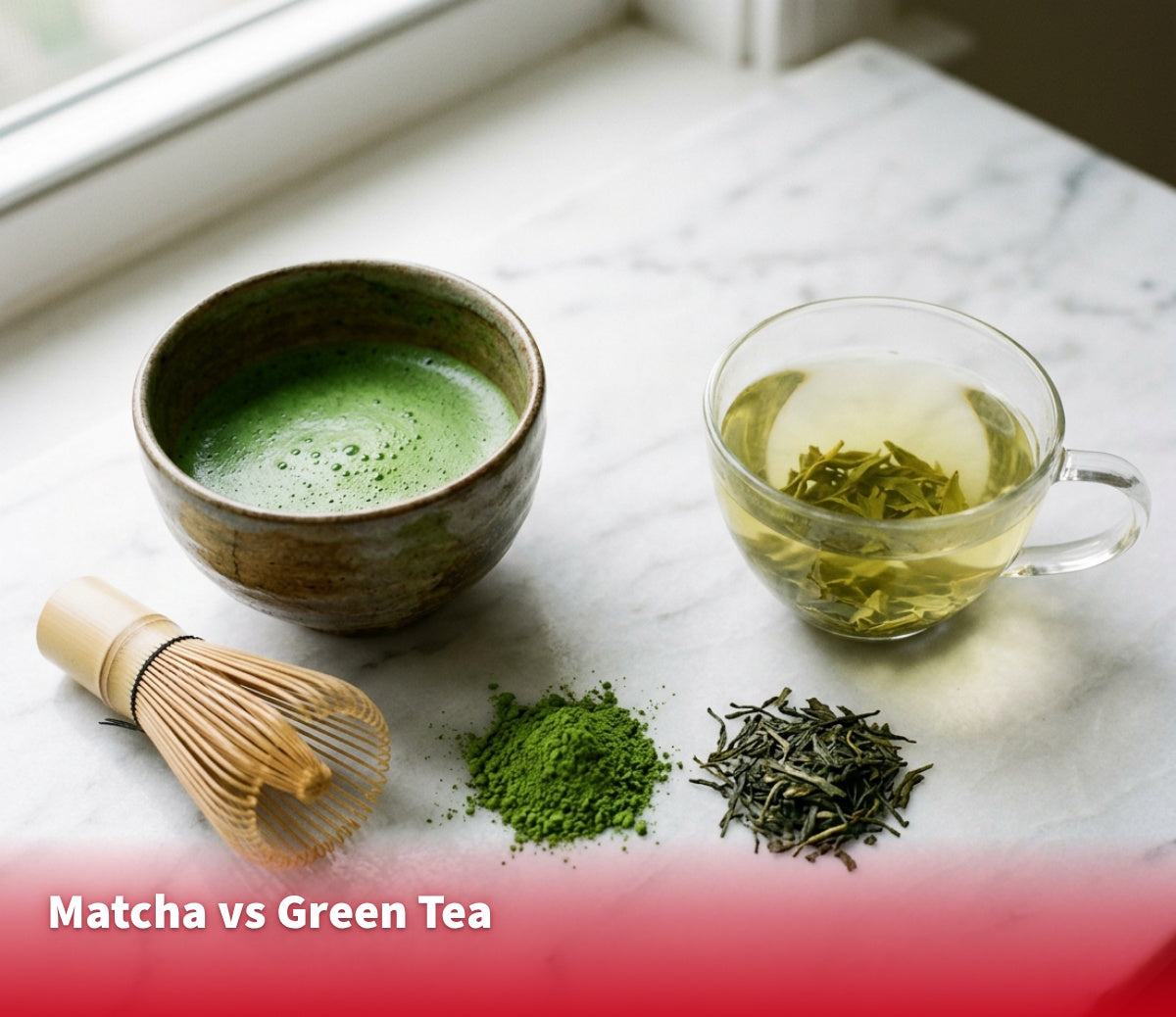
All Japanese green tea starts in the same place: rows of Camellia sinensis bushes soaking up the sun. For regular green tea -- sencha, the kind most Japanese people drink daily -- the leaves are harvested, steamed to stop oxidation, rolled, and dried. What you brew is an infusion: hot water extracts some of the leaf's compounds, and the leaves are discarded.
Matcha begins with a critical intervention. Roughly three to four weeks before harvest, the tea fields are covered with shading structures that block most of the sunlight. This forces the plant into a kind of chemical panic. Deprived of light, the leaves overproduce chlorophyll to capture whatever remains -- which is why matcha is so intensely green. More importantly, shading causes the leaves to accumulate L-theanine, an amino acid responsible for umami flavor. Normally, L-theanine converts to catechins (bitter and astringent) when exposed to sunlight. Block the sun, and the conversion slows dramatically. The result is a leaf loaded with umami and sweetness, with reduced bitterness.
After harvest, the shaded leaves are steamed and dried flat rather than rolled, producing tencha -- flaky green confetti with stems and veins removed. The tencha is then ground between granite stone mills into an extremely fine powder. A single mill produces only a small amount per hour, which is one reason genuine matcha is expensive.
When you drink matcha, you consume the entire leaf suspended in water. Brewing sencha extracts only part of what is in the leaf. Matcha delivers all of it.
2) The Taste Difference: Why Matcha and Green Tea Are Nothing Alike
Brew a cup of good sencha and you get something light, refreshing, and gently vegetal. There is a pleasant grassiness, a hint of sweetness, maybe a slight astringent edge that cleanses the palate. It is a subtle drink, meant to complement a meal rather than dominate it.
Whisk a bowl of good matcha and you enter a different world entirely. The first thing you notice is the body -- matcha has a creamy, almost velvety weight on the tongue that no brewed tea can match. Then comes the flavor: rich, deeply savory, with a pronounced umami that reminds some people of good seaweed broth or aged Parmesan. There is sweetness in there too, a kind of vegetal sweetness that lingers. And yes, there is bitterness, but in quality matcha it is balanced and pleasant, not harsh.
This flavor profile -- the interplay of umami, sweetness, and bitterness -- is precisely why matcha translates so well into confections. Japanese pastry chefs discovered generations ago that matcha's bitterness performs the same role in sweets that dark chocolate does: it counterbalances sugar, adding depth and preventing cloying sweetness. A matcha cookie is not just a green cookie. The bitterness cuts through the butter and sugar, creating a flavor that is sophisticated in a way that "green tea flavored" products rarely achieve.
This is why matcha quality matters enormously in snacks. Cheap matcha, ground from lower-grade leaves with less shading, tastes flat and harshly bitter. Premium matcha brings the full umami-sweet-bitter complexity that makes a snack memorable. When you see "Uji Matcha" or "Nishio Matcha" on a package, those are real geographical designations tied to specific growing conditions -- not just marketing. That umami depth is also why matcha integrates into chocolate and baked goods as if it were designed for them.
3) From Tea Ceremony to Kit Kat: Matcha's Unlikely Journey
For most of its history, matcha was not a mass-market product. It was the tea of chanoyu -- the formal tea ceremony codified by Sen no Rikyu in the 16th century. The bowls, the bamboo whisk (chasen), the precise movements -- everything about matcha preparation belonged to a world of restraint and aesthetic discipline. Most Japanese people drank sencha daily and encountered matcha only at formal occasions or temples.
The shift began in the 1990s, when Haagen-Dazs Japan launched a green tea ice cream that became a runaway hit. It proved that matcha's flavor could work in a Western-style dessert format. But the real explosion came in the early 2000s, driven by two forces: a domestic boom in green tea's popularity, and the growing interest among Japanese confectionery companies in premium, distinctly Japanese flavors.
Nestle Japan's matcha Kit Kat, first released in 2004, was the product that broke everything open. The first flavor was Uji Matcha, named for the famous tea-growing area near Kyoto, and matcha Kit Kats soon became a fixture of Japan's gotochi (regional specialty) souvenir shelves. Tourists loved it. They bought boxes to bring home as gifts. Word spread internationally. When photos of green Kit Kats hit Western social media, the reaction was a mixture of disbelief and desperate curiosity. "Wait -- green tea chocolate? From Japan?"
In the years that followed, most major snack brands in Japan added a matcha variant. Pocky, Alfort, Kinoko no Yama, Takenoko no Sato -- all launched matcha editions that became permanent or annually recurring products. Internationally, Starbucks added matcha lattes, and Instagram turned that photogenic green into a visual shorthand for "Japanese and sophisticated." But here is the irony: most matcha consumed outside Japan is culinary-grade powder buried under milk and sugar. Japanese matcha snacks, made by companies that understand the ingredient deeply, remain one of the easiest ways for most people to taste what matcha really is.
4) Matcha Snacks Worth Trying: A Guided Tour
Not all matcha snacks are created equal. Here is a curated selection of products that showcase different facets of what matcha can do, all from established Japanese brands that take the ingredient seriously.
Kit Kat Rich Matcha -- The product most closely tied to the international matcha snack craze. Nestle Japan uses Uji matcha in a white chocolate coating over their signature wafer. "Rich Matcha" lives up to its name: the matcha flavor is assertive, genuinely bitter, and unmistakably tea-forward. It does not taste like candy that happens to be green. It tastes like matcha that happens to be candy. For many fans, this is the benchmark.
Pocky Uji Matcha -- Glico coats their famous pretzel sticks in a matcha cream that hits a different balance point than the Kit Kat. Here, the matcha is more mellow, working in harmony with a gentle dairy sweetness. The pretzel stick adds a salty, biscuity crunch that grounds the flavor. This is an excellent entry point for someone who finds straight matcha too intense. It is sold mainly as a regional edition, so it is the hardest of the five to track down.
Alfort Rich Matcha -- Bourbon takes their signature chocolate biscuit -- the one with the sailing ship embossed on top -- and replaces the standard chocolate layer with a matcha chocolate coating. The wheaty, slightly buttery biscuit base turns out to be an outstanding partner for matcha. The biscuit's toasted-grain flavor bridges the gap between the matcha's vegetal bitterness and the coating's sweetness. This might be the most balanced matcha snack on this list.
Kinoko no Yama Uji Matcha -- Meiji's mushroom-shaped biscuit snack gets a seasonal matcha treatment. The matcha chocolate cap sits on a crunchy biscuit stem, and the proportions mean you get a concentrated hit of matcha in each bite. Meiji uses Uji-sourced matcha, and you can taste the specificity -- there is a rounded, almost toasty quality that distinguishes Uji matcha from other origins.
Takenoko no Sato Nishio Matcha -- The eternal rival to Kinoko no Yama (the "mushroom vs bamboo shoot" debate is a genuine cultural phenomenon in Japan). Takenoko no Sato uses matcha from Nishio in Aichi Prefecture, one of Japan's best-known matcha-producing regions. Nishio matcha tends to be slightly sweeter and less astringent than Uji matcha, which makes this version feel a bit softer and more approachable. The cookie base has more butter richness than Kinoko no Yama's biscuit, which changes the overall balance. Trying both side by side is one of the best ways to understand how origin affects matcha flavor.
If you are comparing these products, a useful exercise is to taste them in order of matcha intensity: start with Pocky (mellow) if you can get it, move through Takenoko no Sato and Alfort (balanced), then finish with Kit Kat Rich Matcha and Kinoko no Yama (assertive). You will develop a quick sense of where your personal preference sits on the matcha spectrum.
Conclusion: The Leaf That Changed Japanese Snacking
Matcha and green tea share a plant but almost nothing else. The weeks of shading, the stone grinding, the decision to consume the whole leaf rather than an infusion -- these choices produce a flavor so distinctive that it reshaped an entire snack industry. What was once reserved for temple ceremonies and tea masters became the defining taste of Japanese confectionery innovation.
The next time someone tells you that matcha is "just green tea," you will know better. It is a product of obsessive agricultural technique, centuries of cultural refinement, and a flavor profile so naturally suited to sweets that it almost seems engineered for them. The best way to appreciate the difference is not to read about it but to taste it -- starting with the snacks that do the ingredient justice.
Ready to find your favorite? Browse matcha snacks at Tokyo Stash.
Keep reading:
Explore more Japanese snacks and culture stories on Tokyo Stash.